1. Two Quarters, Two Record Highs
SEMI's Worldwide Semiconductor Equipment Market Report shows global billings of 36.55 billion USD in the first quarter of 2026, up 14% year on year and 1% quarter on quarter, a record for a single quarter. The second quarter climbed further to 40.53 billion USD, up 23% year on year and 11% quarter on quarter, marking a second consecutive quarterly peak.
SEMI President and CEO Ajit Manocha said the back-to-back record billings reflected continuing investment in advanced manufacturing capacity to meet growing chip demand, particularly for AI infrastructure.
By region, the second quarter of 2026 broke down as follows.
| Rank | Market | Billings | YoY | QoQ |
|---|---|---|---|---|
| 1 | Mainland China | $11.36bn | +5% | +8% |
| 2 | Taiwan of China | $8.77bn | +24% | +24% |
| 3 | South Korea | $5.91bn | +54% | +2% |
| 4 | North America | $2.76bn | +27% | +7% |
| 5 | Japan | $2.68bn | −9% | +13% |
| 6 | Europe | $0.72bn | +70% | +30% |
Two comparisons stand out. Mainland China holds the largest scale, but its growth has slowed markedly at +5%, well below the global average of 23%. South Korea, at +54% year on year, was the fastest-growing major market, driven mainly by HBM capacity expansion at Samsung and SK Hynix, while Europe at +70% was the fastest-growing region overall. Global capacity investment is moving from a single-engine story to a multi-polar expansion.
2. Full-Year Outlook: 165.9 Billion USD, a Record
SEMI's mid-year forecast, published in July 2026, puts global semiconductor manufacturing equipment billings at 165.9 billion USD for 2026, up 23.2% year on year and a record high, with 229.5 billion USD expected by 2028. On a wafer fab equipment basis, the 2026 figure has been revised up to 143.9 billion USD.
Three parallel expansion lines sit behind the upgrade.
Advanced nodes at 3nm and below
Continued iteration on leading-edge process technology.
AI-driven memory expansion
HBM capacity in particular, where demand keeps outrunning supply.
Advanced packaging capacity
Build-out of the packaging lines that AI accelerators depend on.
That is why conditions on the equipment side are running ahead of, and stronger than, the recovery in consumer electronics.
3. Mainland China: Six Years at the Top, Now Running High
Citing SEMI data, Jiwei Consulting reports mainland China semiconductor equipment billings of approximately 49.3 billion USD in 2025, around 36.5% of the global total. Since first taking the top position in 2020, the region has held it for six consecutive years, and is expected to account for close to 30% of the global market in 2027.
What the stage change actually means
Industry estimates put mainland China's 2026 equipment purchases at roughly 48 billion USD, or about 33.8% of the global total, a modest retreat from 36.5% in 2025. This is not shrinking demand. It is the natural high-plateau phase that follows two years of intense capacity build-out. Having completed a concentrated installation round, fabs have shifted from racing for capacity to adjusting their mix, with new investment flowing towards advanced nodes and the missing links in specialty processes.
4. Domestic Substitution: From 16% to Over 30%, but Definitions Differ
This is the set of figures most often misread, because the agencies count differently.
China Industrial Economy Information Network
Overall domestic substitution in semiconductor equipment has risen from roughly 16% in 2024 to over 30% in the first half of 2026, with core steps such as etching and cleaning exceeding 40–50%.
Jiwei Consulting
Domestic equipment accounts for about 35% and is moving towards 40%.
The two figures are not contradictory; the gap comes from methodology — whether joint ventures are counted, whether the basis is value or unit count, whether front-end and back-end are separated. What can be stated with confidence is the direction: domestic equipment is moving from usable to genuinely good, customer qualification and adoption are visibly faster, and Chinese suppliers in etching, thin-film deposition, cleaning and CMP carry full order books with lengthening lead times.
5. What It Means for Electronics Manufacturing and Audio
Semiconductor equipment is the furthest upstream link in the chain, and its health travels downstream through components to finished equipment. Three things follow.
Component supply becomes more predictable
Upstream capacity expansion eases the tightness in chips, power devices and passives. For audio manufacturers — an industry that uses modest volumes of a very wide range of parts — both procurement lead times and cost volatility should flatten out.
Domestic substitution lowers the entry barrier for smaller assemblers
High-end audio processing chips and DSP devices were once imported, expensive and hard to buy in small quantities. As domestic parts ramp on mature nodes, the bill of materials for mid-range equipment comes down with them.
Competition returns to system capability
Once upstream supply stops being the bottleneck, the gap between equipment makers is no longer about whether they can get parts. It is about solution design, commissioning and understanding of the scenario — the same shift that has moved classroom audio from selling boxes to delivering solutions.
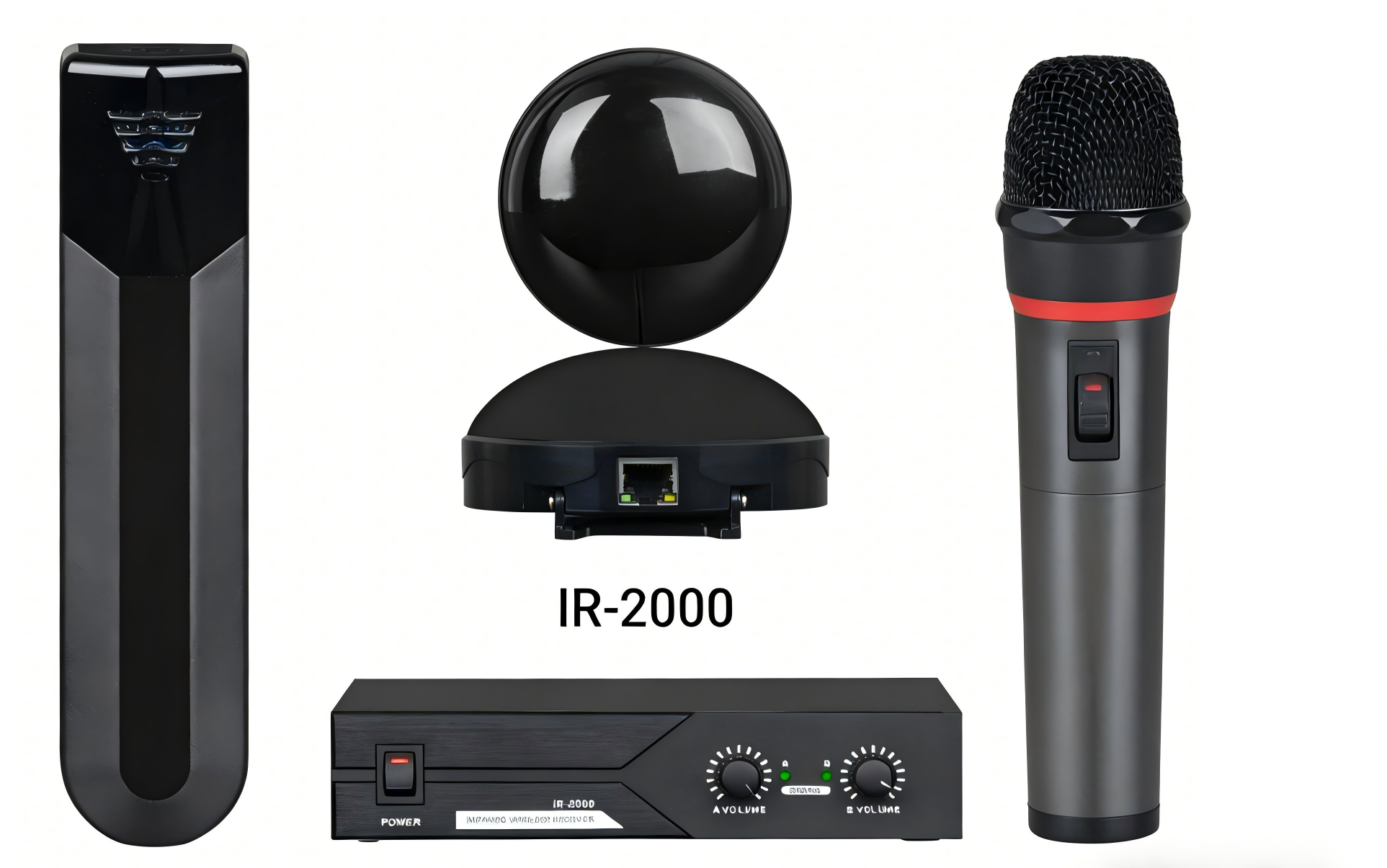
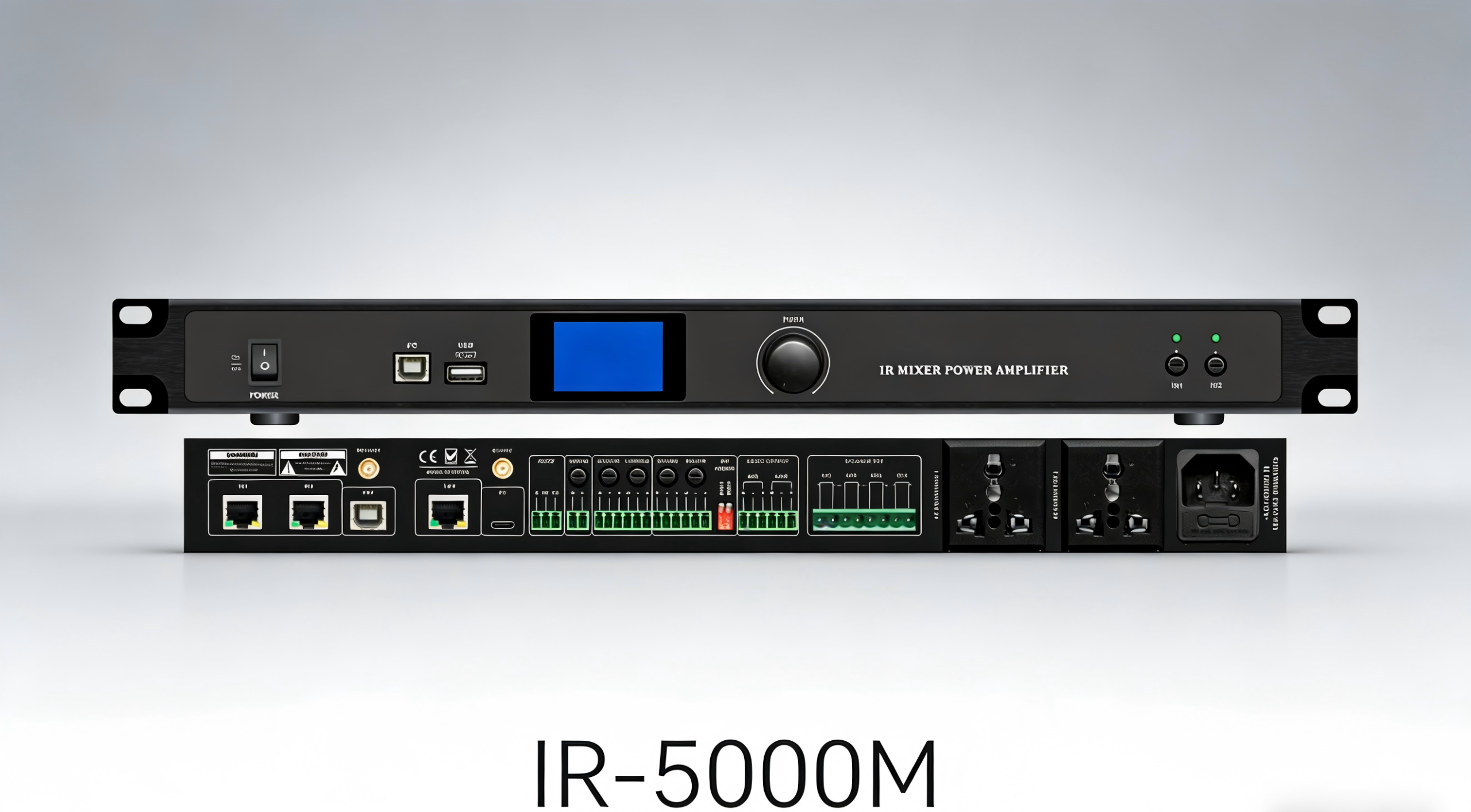
For Haixin, the product matrix built around the infrared route — the IR-5000M amplifier, the IR-230MD teaching amplifier, the IR-2000 receiver, the IR-300H microphone and the CD-4 dock — is valuable precisely because one technical foundation covers deployments from a single classroom to a whole-school retrofit. A stable upstream supply chain makes that scalability a more dependable promise to make.
6. A Closing Note
Six consecutive years as the largest semiconductor equipment market is a first place whose meaning is changing: from scale to structural improvement, from buying equipment to building it. Slower growth is not a signal of decline; it is what an industry looks like when it moves from expansion into depth.