

Why Schools Are Paying More Attention to Classroom Audio
A teacher speaks for several hours a day. Without amplification, sustained projection leads to vocal fatigue and strain on the vocal cords, and teaching effectiveness drops with it. A wireless microphone lets a teacher speak at a natural level while the back row still hears clearly.
Choose the wrong system, however, and the amplification creates problems of its own.
Choosing the wireless technology that fits the teaching environment matters more than choosing any particular product.
The Two Technologies and Where Each Belongs
UHF wireless microphone
Carries audio on radio frequencies, giving wide coverage, long range and strong penetration through obstacles.
Home ground: sports halls, theatres, auditoriums, studios, large conference centres.
Infrared wireless microphone
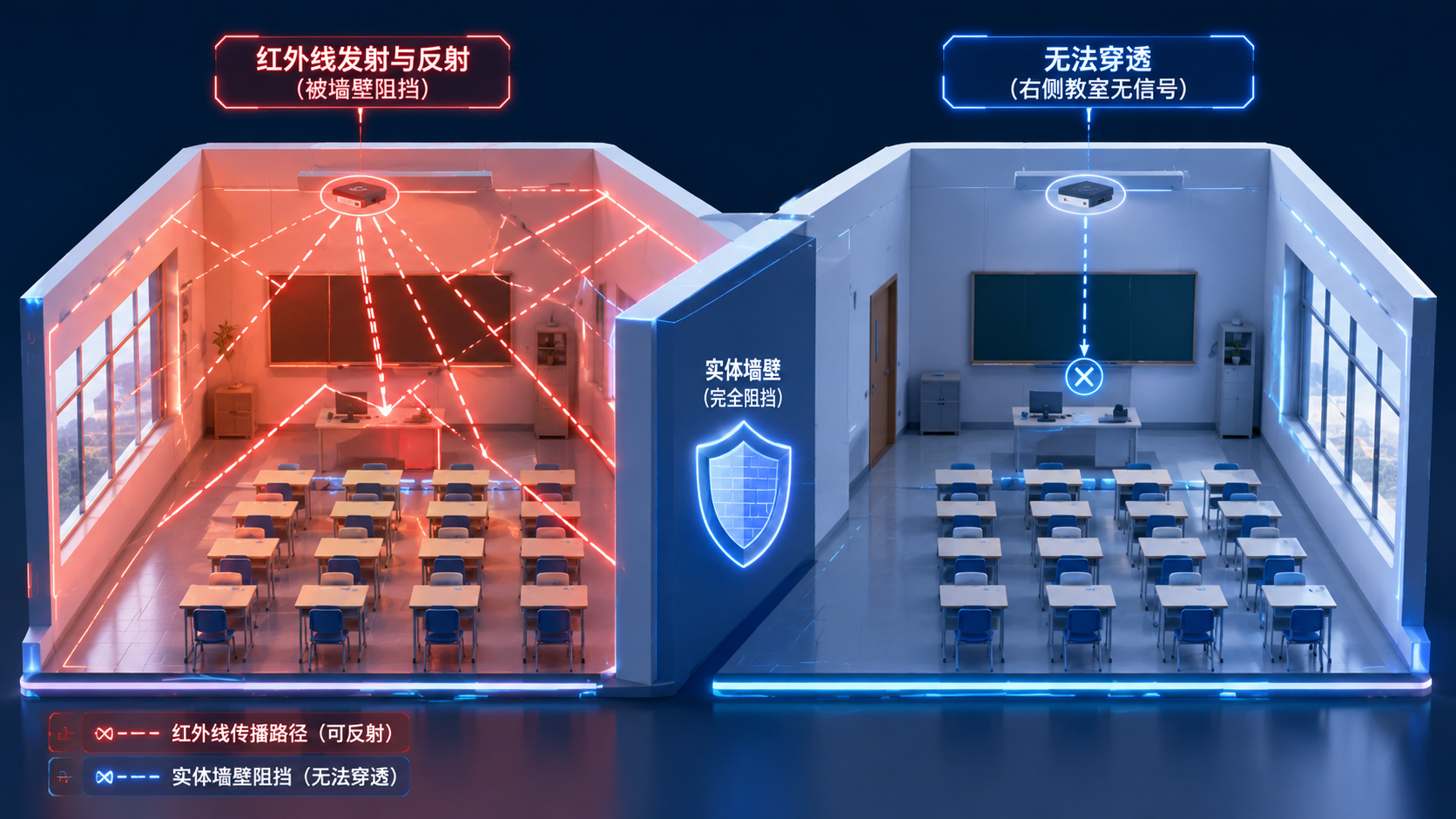
Carries digital audio as infrared light, so every classroom forms its own self-contained coverage zone that cannot interfere with the next.
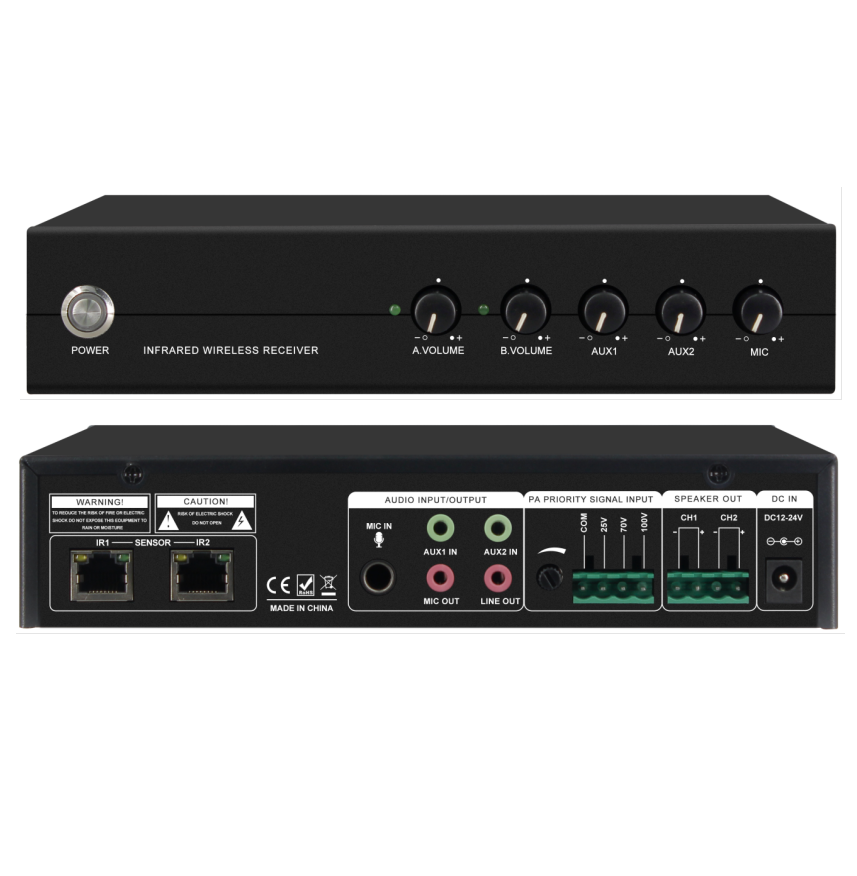
Home ground: standard classrooms, smart classrooms, lecture capture rooms, language labs.
Three Dimensions Compared
The three comparisons below map onto the questions schools actually ask: will it bleed into the next room, will students hear it clearly, and will anyone be able to maintain it afterwards.
Interference immunity — the metric schools care about most
Radio transmission. Co-channel interference, crosstalk and frequency collisions are common — the classic case being the PE teacher's commands from next door suddenly coming out of your own loudspeakers.
Crosstalk risk, frequencies must be planned in advanceInfrared light transmission. Light cannot pass through walls, so rooms are physically isolated from one another — a dozen classrooms on a floor can run at once without any interaction.
Isolated by physics, zero crosstalkSound quality — being heard clearly matters more than being heard loudly
Wide dynamic range and a full-bodied sound, well suited to speeches and performances. In a complex RF environment, however, external interference can raise the noise floor.
Large presentations, stage shows, PE teachingHigh speech intelligibility, natural reproduction, no RF noise and no electromagnetic interference. Language teaching demands far more of clarity than of volume.
Language teaching, demonstration lessons, lecture captureMaintenance — what determines how it feels to live with
Requires frequency planning, channel management and interference troubleshooting. Maintenance cost climbs with every classroom added, and usually needs a dedicated AV technician or IT team behind it.
High management overheadInstall and use. Rooms run independently and rarely need retuning, with no frequency planning and no avoidance scheme to maintain — far friendlier to facilities staff and ordinary AV administrators.
Very low management overheadKey Specifications at a Glance
| Dimension | UHF wireless | Infrared wireless |
|---|---|---|
| Transmission medium | Radio frequency | Infrared light |
| Range | Longer (hundreds of metres) | Room-scale (tens of metres) |
| Wall penetration | Strong | None (physical isolation) |
| Crosstalk risk | Present | None |
| Interference immunity | Good | Excellent |
| Sound stability | Good | Excellent |
| Frequency management | Required | Not required |
| Maintenance difficulty | Higher | Lower |
| Fit for teaching | ★★★☆☆ | ★★★★★ |
Selection Guide: Match the Technology to the Room
No technology is universally better. Matching the scenario is the only real standard.
Large or open venues
Sports halls, auditoriums, multi-function lecture theatres, playing fields
Dense, standardised classrooms
Standard classrooms, smart classrooms, lecture capture rooms, training rooms
In Closing
For a school, a sound reinforcement system is not simply a volume booster. It is infrastructure that underpins teaching quality. Rather than chasing the longest possible transmission range, education buyers should ask three questions: will it suffer crosstalk, is it easy to maintain, and is it stable enough.
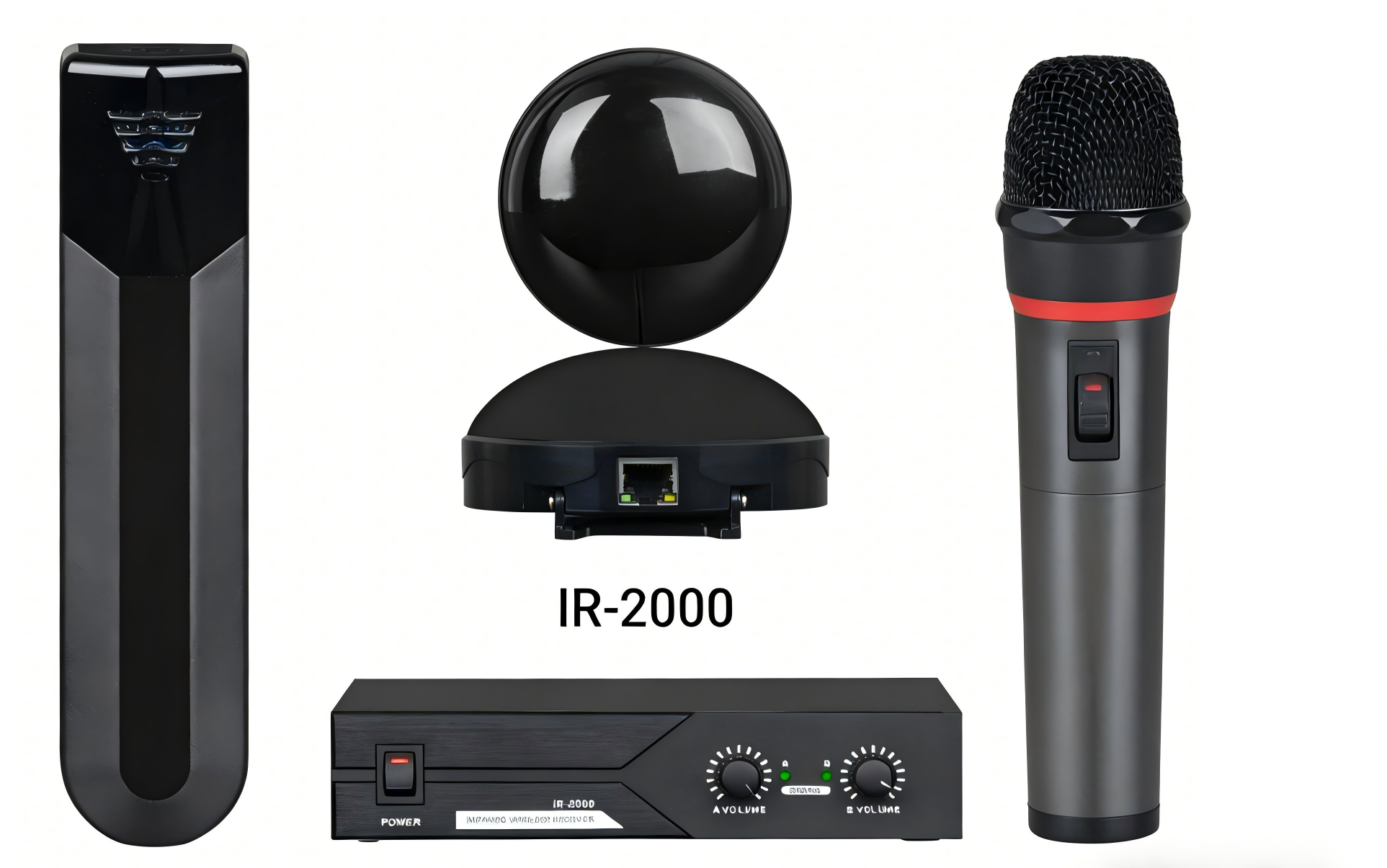
Judged on those terms, digital infrared wireless microphones — with zero crosstalk, no maintenance burden and high clarity — are becoming the mainstream choice for classroom audio in the modern smart classroom.