

Not long ago I sat in on lessons at a primary school to see how teaching actually works day to day. A Chinese language teacher put it this way.
Four or five lessons a day and my voice is gone by the last one. But the bigger headache is that the students at the back simply cannot hear me.
In a large class the teacher has to look after the front rows, the middle and the back all at once. Speak too quietly and the back cannot hear. Speak too loudly and feedback sets in, and the voice gives out anyway. It costs the teacher effectiveness and costs students the experience of the lesson at the same time.
Problem One: Conventional Audio Often Works Against You
To take the pressure off teachers' voices, many schools install ordinary wireless microphones and amplifier-loudspeaker sets. Then the problems arrive.
Frequent howling
The moment the microphone is switched on, a piercing squeal cuts through the room and the lesson stops dead.
Bleed from the next room
The PE teacher's instructions arrive in the middle of a maths lesson. Students lose the thread and the teacher has to pause.
Expensive to upgrade
Improving the system means ripping out the old loudspeakers and re-cabling the room, which puts real pressure on the budget.

Problem Two: The Teacher Strains, the Students Struggle
The teacher has no choice but to raise the voice and push harder, and the throat pays for it. Students at the back try to follow but lose the pace.
Across a forty-five minute lesson, the teacher spends half of it shouting and the students spend half of it guessing what was said. The efficiency of the lesson goes with it.
One Upgrade Changed the Whole Experience
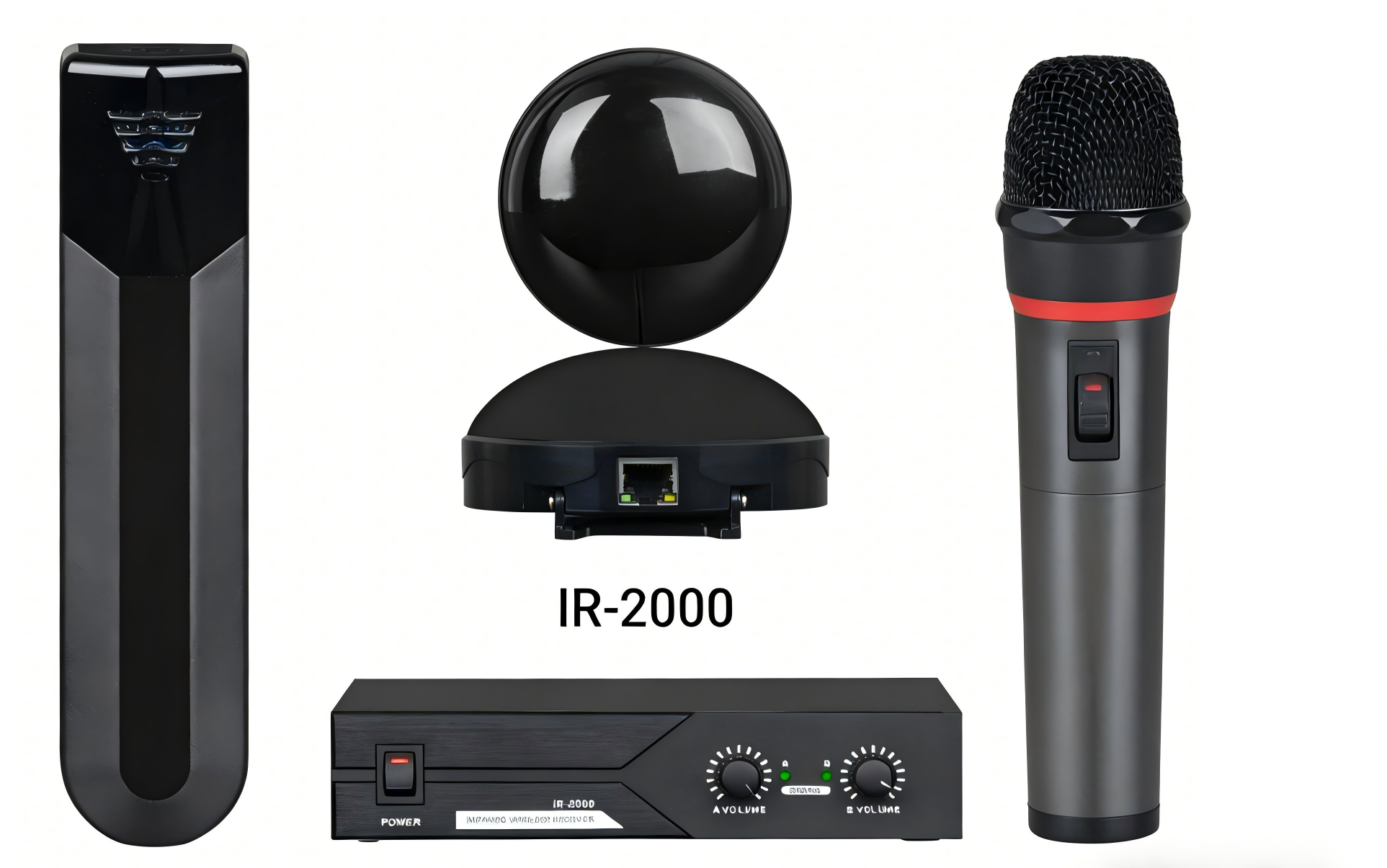
The school eventually installed the IR-2000 digital infrared classroom audio system. The change was immediate.
Infrared transmission ends both crosstalk and howling
The IR-2000 carries audio on infrared light, so each classroom forms its own coverage zone, immune to the room next door and to external radio interference. The teacher speaks clearly and naturally, students listen, and the room settles down.
Dual channel takes the strain off the voice
Two microphones can run at once, in handheld or neck-worn form. Sound covers the whole room, front to back, so the teacher can hold a normal speaking level and the voice still holds up at the end of a long day.
One teacher, one microphone
Each teacher has a personal microphone: put it on to teach, drop it on the charging dock afterwards. No borrowing, no shared hygiene concerns, and far less to manage.
Straightforward compatibility, painless upgrade
The IR-2000 connects directly into a school's existing amplifier and loudspeakers. Nothing has to be stripped out, the retrofit cost stays low, and it suits both new build and older classrooms.
Product Highlights
Wide coverage, clear at distance
Each receiver unit covers a radius of more than twenty metres, and two to four units cover the whole classroom with no dead spots.
A choice of microphone
Handheld or neck-worn, whichever suits the teacher and the subject.
Hygienic by design
One microphone per teacher means no shared equipment and no cross-infection concern.
Simple to operate
Switch on and teach. No pairing, no tuning, no learning curve for the teacher.
Broad compatibility
Connects into existing amplifiers and loudspeakers, keeping the retrofit small and the cost contained.
No radio-frequency radiation
Infrared is light rather than radio, so wearing it all day produces no harmful RF exposure.

In Use
The same Chinese language teacher described the difference afterwards.
With the microphone on it feels like having a conversation with the class. The sound lands properly, it is clear and comfortable, and I am not wrecking my voice any more.
The IR-2000 is not simply a piece of equipment. It is a tool that lets a teacher teach comfortably and lets students listen properly.
In Summary
Good classroom audio is not about making the sound louder. It is about making the lesson easier and more natural.