Not long ago the AV coordinator at a school said something to me that has stayed with me.
He put it plainly.
When a projector fails, one lesson is affected. When a computer lags, half a day is affected. But when the classroom audio does not work properly, it affects every lesson, every day.
With many classes now well over forty students, the tiring part of a lesson is rarely the board work. It is the talking.
What teachers dread is not students failing to hear
Most people assume classroom audio is simply about making the voice louder. What actually frustrates teachers tends to be something else entirely.
Howling
The microphone is switched on and a piercing squeal cuts across the room. Students cover their ears; the teacher switches it off in a hurry. Something meant to spare the voice becomes the thing that interrupts the lesson.
Crosstalk
The PE class next door is in full swing while the maths teacher works through a problem. Suddenly the loudspeaker announces, "Attention, form up!" In schools still running conventional wireless systems this is far from rare — especially when a dozen classrooms on one floor are teaching at the same time.
The upgrade problem
Most schools are not short of loudspeakers. They already have amplifiers, speakers and cabling. The trouble is that the equipment has aged and no longer keeps up, while a full strip-out and rebuild is beyond the budget. So many schools sit in a state of wanting to upgrade but not daring to.

The school took a different approach
Rather than tearing everything out, they upgraded on top of what already existed. That is precisely why more and more schools are turning to infrared classroom audio.
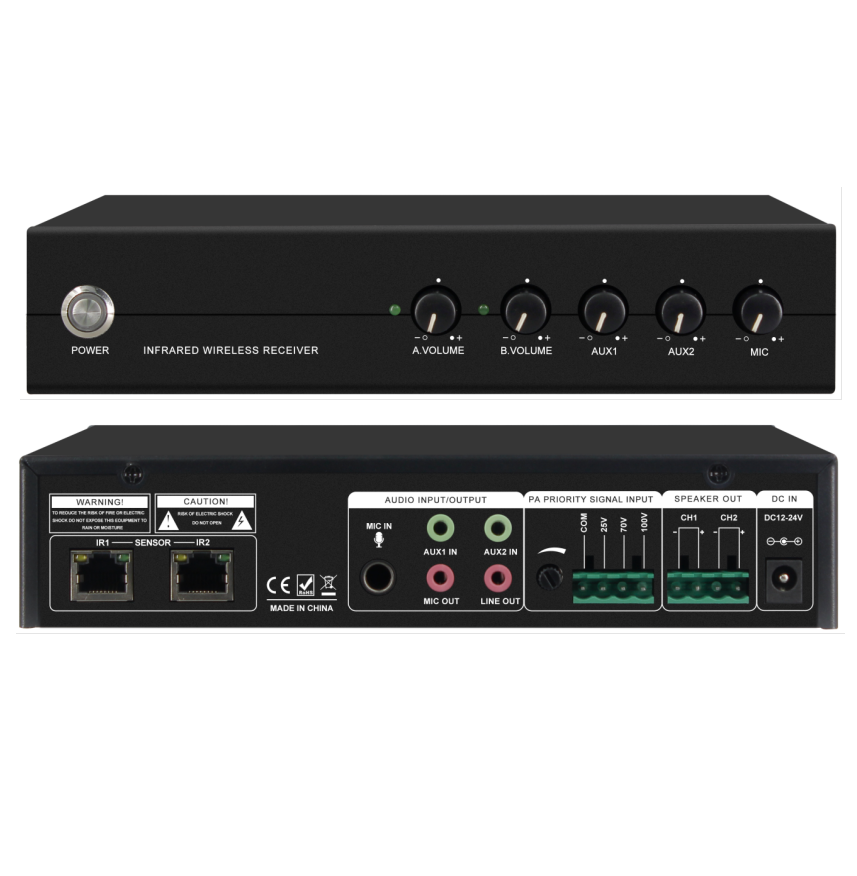
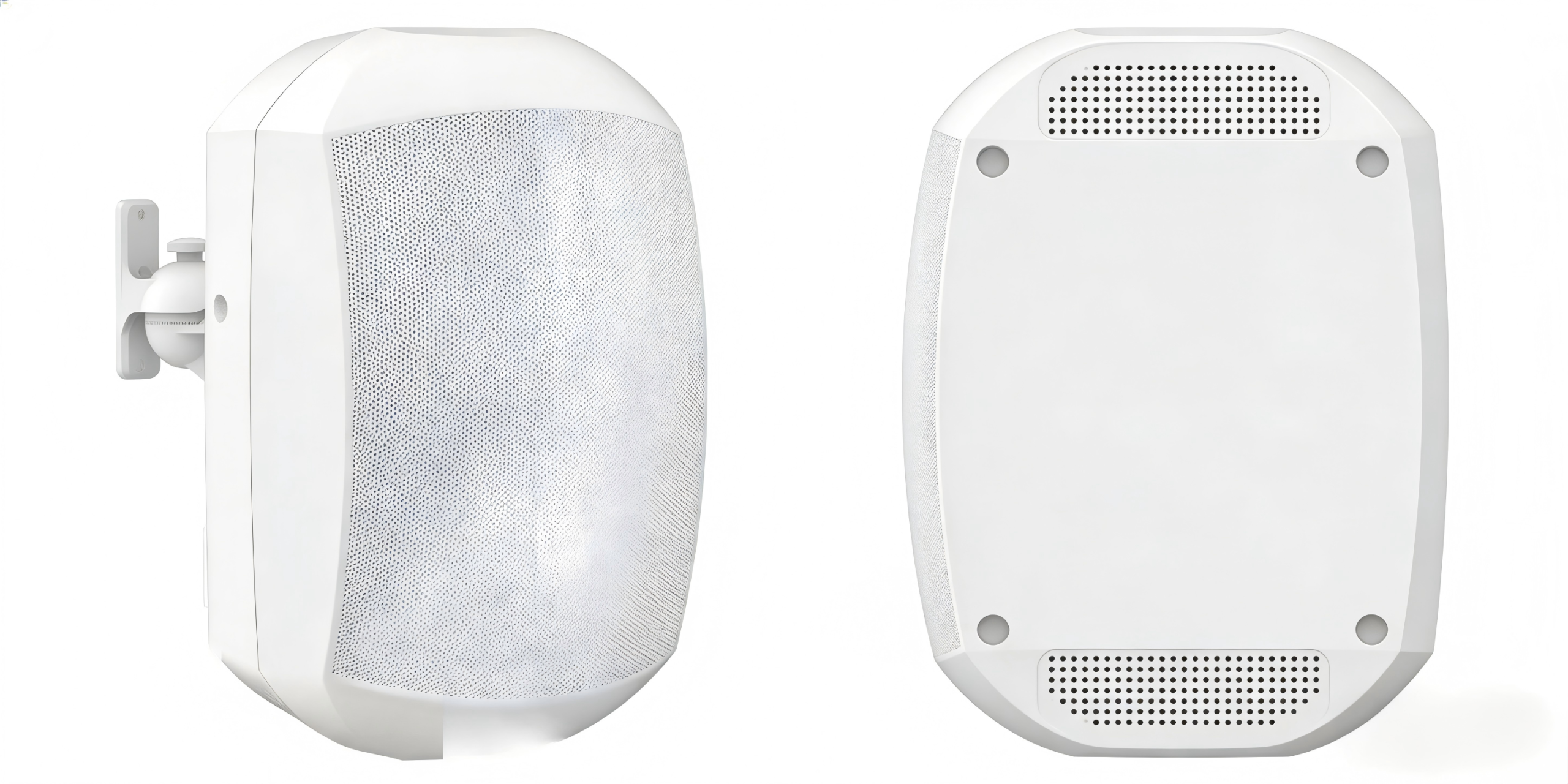
The package they looked at pairs an IR-230MD all-in-one infrared teaching amplifier with RH-MS720D all-weather wall loudspeakers. On the surface it is simply a new set of audio equipment. In practice it addresses several problems that conventional wireless systems have carried for years.

Why does infrared audio not suffer crosstalk?
The easiest way to picture it is that every classroom has its own private "light channel".
The teacher wears a microphone and the voice is carried on infrared light. That signal does not pass through walls and cannot reach the room next door. Even with dozens of classes running at once across a floor, none of them interfere with each other.
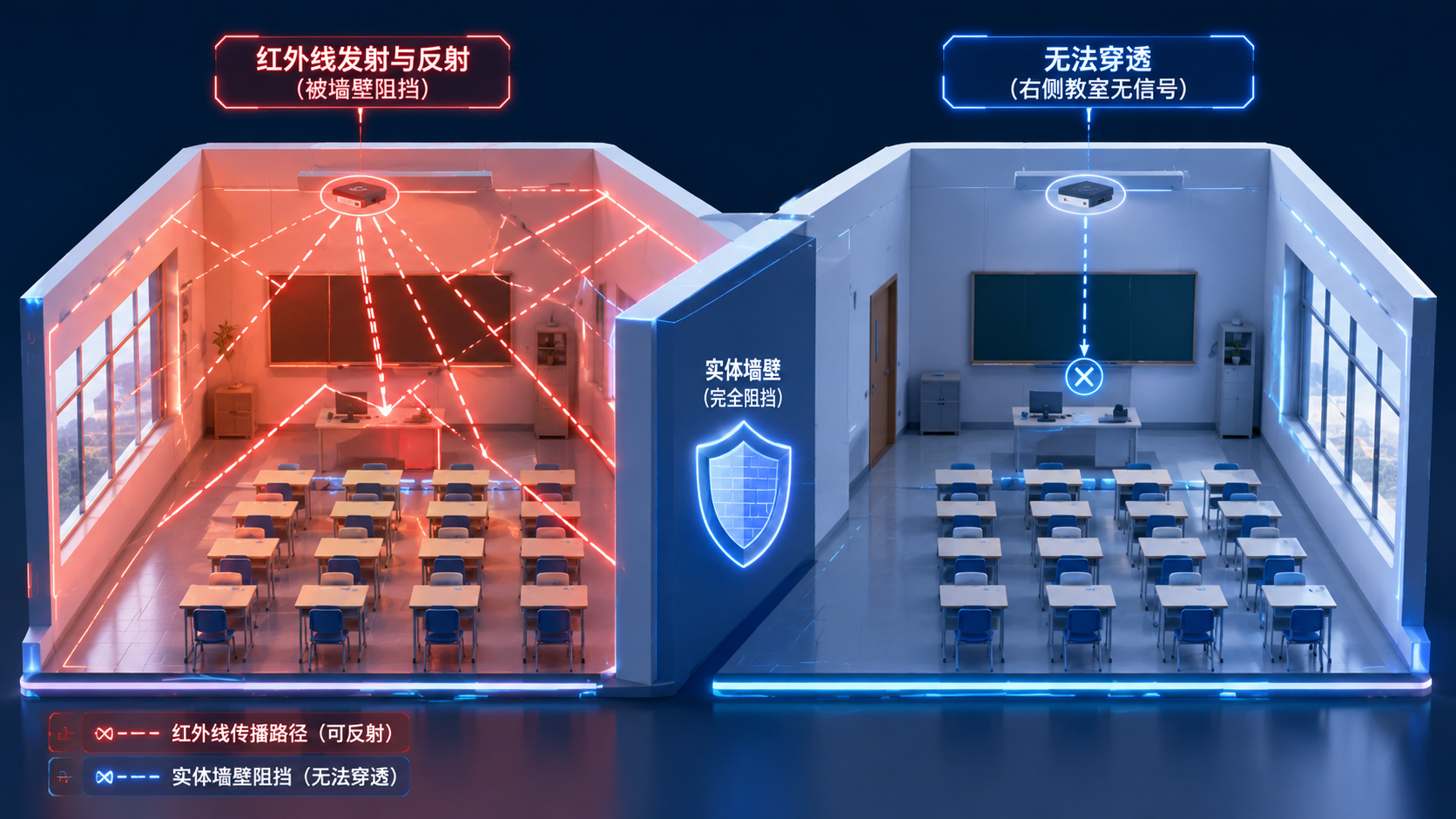
For a school, that means one thing in particular: the class next door will never suddenly appear in your loudspeaker.
Why is howling less likely?
In conventional systems the cause is almost always feedback: sound from the loudspeaker is picked up again by the microphone and loops. The IR-230MD builds in DSP audio processing and feedback suppression.

In plain terms, the equipment identifies the frequencies most prone to howling and deals with them before they build. A teacher speaking normally, even standing close to a loudspeaker, will not trigger that piercing squeal. The lesson simply runs more steadily.
Why does the amplifier matter more than people expect?
Buyers tend to focus on the microphone. In reality it is usually the amplifier behind it that decides how the room actually sounds.
The IR-230MD uses a digital amplifier architecture with an on-board DSP chip. Put simply, it does not only make the voice louder, it also makes the voice sound better.
The teacher is clearer, students find listening easier, the back row no longer has to guess and the front row no longer gets an earful.
Can the existing loudspeakers be reused?
This is the question schools ask first, and in most cases the answer is yes.
The IR-230MD carries a full set of audio inputs and can be connected straight into an existing loudspeaker system. Where a school is building new classrooms, it can instead be paired with RH-MS720D wall loudspeakers.
A good loudspeaker goes unnoticed, but never unfelt
The RH-MS720D uses a two-way crossover design. That sounds technical, but the practical effect is simple.
Speech comes through with clearer highs and fuller low-midrange, without the muffled, smeared quality that makes listening tiring. In language subjects especially, students notice almost immediately that the lesson is easier to follow.

Classroom, corridor, outdoors
The commonest complaint about school equipment is that it starts to rust a year after installation.
The RH-MS720D uses a PP enclosure with an all-aluminium grille. In everyday language: it tolerates damp and it does not rust. Mounted in corridors, covered walkways or open areas, it keeps working year after year.
What actually satisfies a school is not the spec sheet
If the whole system had to be summed up in one sentence, it would be this.